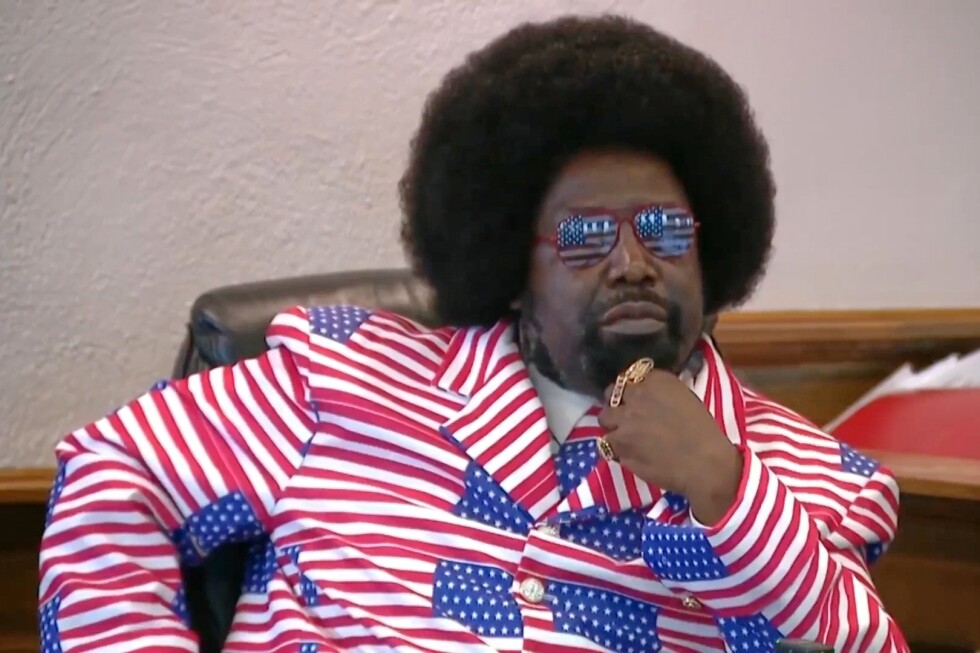
A Resounding Victory for Free Speech: Afroman Prevails in Defamation Lawsuit
In a landmark decision reverberating through legal and artistic circles, Grammy-nominated rapper Afroman has emerged victorious in a high-stakes Afroman defamation lawsuit. A jury in Adams County, Ohio, decisively sided with the musician, whose real name is Joseph Edgar Foreman, affirming that his creative works mocking a controversial 2022 raid on his home were protected under the fundamental principles of free speech. This verdict isn't just a win for Afroman; it's a powerful statement on artistic liberty, police accountability, and the robust protections afforded by the First Amendment.
The Raid That Sparked a Battle: From Home Invasion to Hit Songs
The genesis of this legal saga traces back to August 2022, when Joseph Foreman’s home was subjected to a raid by seven members of the Adams County Sheriff’s Office. Ostensibly executed under a warrant citing suspicions of drug trafficking and kidnapping, the raid ultimately yielded no charges. However, the incident was far from forgotten. Afroman, known for his witty and often irreverent musical style, channeled his experience into a series of music videos that quickly went viral. These videos, which garnered millions of views, ingeniously incorporated his home security footage from the raid, depicting deputies searching his residence. Tracks like "Lemon Pound Cake" humorously highlighted officers' apparent interest in a dessert found in his kitchen, transforming a stressful event into biting social commentary.
The deputies involved in the raid, however, saw things differently. They collectively filed a lawsuit seeking nearly $4 million in damages, alleging defamation, invasion of privacy, and unauthorized use of their likenesses in Afroman's music videos, merchandise, and social media. Deputy Randolph L. Walters Jr., among others, testified to experiencing profound personal and emotional harm. He claimed that Afroman’s lyrics and videos, particularly those making false statements about his wife, caused "tremendous pain" and damaged his reputation by labeling him negatively and even calling him a "thief." Another deputy reportedly became emotional in court while watching a music video that mocked her, underscoring the perceived impact of Afroman's artistic response.
At the Heart of the Matter: Free Speech vs. Defamation Claims
The core of the Afroman defamation lawsuit revolved around the delicate balance between an individual's right to free expression and another's right to protect their reputation and privacy. The deputies argued that Afroman's use of their images and the content of his lyrics constituted false statements and an invasion of their privacy, causing them significant distress and public ridicule. They contended that Afroman crossed the line from commentary into actionable defamation.
Afroman's legal team, however, mounted a robust defense centered on the First Amendment, asserting that his music videos and merchandise were protected as parody and social commentary. During his testimony, Foreman himself affirmed his belief that his work was an exercise of his constitutional right to free speech. Defense lawyer David Osborne eloquently articulated this stance, emphasizing, "No reasonable person would expect a police officer not to be criticized. They’ve been called names before." This argument underscored a crucial legal principle: public figures, including law enforcement officers acting in their official capacity, generally face a higher bar for proving defamation, often requiring proof of "actual malice"—meaning the statements were made with knowledge of their falsity or with reckless disregard for the truth.
The jury's decision highlights the judiciary's recognition of artistic works, even those that are satirical or critical, as legitimate forms of expression. Parody, in particular, holds a protected status in free speech jurisprudence because it often uses humor and exaggeration to comment on society, individuals, or events. The outcome of this case suggests that Afroman's creative response to the raid was viewed as a permissible form of critique, rather than malicious falsehoods intended to harm. For a deeper dive into how parody played a critical role, you can read more about First Amendment Victory: Afroman's Raid Videos Protected as Parody.
A Landmark Verdict: The Jury Sides with Artistic Expression
On Wednesday, a jury of Afroman's peers delivered a unanimous verdict in his favor. Judge Jonathan P. Hein, presiding over the trial in Adams County, confirmed the outcome: "In all circumstances, the jury finds in favor of the defendant. No plaintiff verdict prevailed. So the matter will be concluded with defense verdicts." This declaration brought an end to a contentious legal battle and sparked immediate celebration from Afroman.
Outside the courthouse, a jubilant Afroman exclaimed, "We did it, America! Yeah, we did it! Freedom of speech! Right on! Right on!" He later shared a video on Instagram, captioned, "WE DID IT AMERICA 🇺🇸 GOD BLESS AMERICA 🇺🇸 LAND THAT I LOVE !!! FREEDOM OF SPEECH!!!!!!!!!!!" His heartfelt reaction underscores the profound significance of this victory, not just for his personal reputation and financial well-being (as he faced nearly $4 million in potential damages), but for the broader landscape of artistic freedom and the right to challenge authority through creative means. For many, this case represents a significant win for artists and free expression, further explored in Afroman Beats $4M Lawsuit: A Win for Artists and Free Expression.
The Nuances of Parody and Public Interest
The success of Afroman's defense hinged largely on the argument that his content constituted protected parody. Parody is a form of satire that imitates another work or genre in an exaggerated way, often for comedic effect or social commentary. In Afroman's case, his reappropriation of the raid footage, combined with satirical lyrics, allowed him to comment on the actions of public officials. The jury's decision reinforces the idea that when public officials perform their duties, their actions often become matters of public interest, subject to scrutiny, criticism, and even satire.
This ruling sets an important precedent, affirming that artists can use real-life events, even those involving law enforcement, as source material for their work, provided it falls within the bounds of protected speech. It acknowledges that humor and satire can be powerful tools for critique and that the discomfort they might cause does not automatically equate to defamation, particularly when the subjects are public servants whose actions are inherently newsworthy.
Practical Takeaways and Future Implications
The outcome of the Afroman defamation lawsuit offers several valuable insights and practical takeaways for various stakeholders:
- For Artists and Creators: This victory emboldens artists to use their platforms for social commentary and critique, even when addressing sensitive topics or powerful entities. It reinforces the importance of the First Amendment as a shield for creative expression. However, artists should still be mindful of the distinction between parody/criticism and outright false statements made with malicious intent. While Afroman won, litigation is costly and stressful, highlighting the need for a strong legal defense if challenged.
- For Public Figures and Officials: The ruling serves as a stark reminder that those in positions of public trust, like law enforcement officers, operate under a heightened level of public scrutiny. While their reputations are protected, the bar for proving defamation against them in matters of public concern is high. Criticism, even when harsh or uncomfortable, is often a protected aspect of public discourse. This doesn't mean officials have no recourse against genuinely false and malicious attacks, but it underscores the strength of free speech protections.
- For the Public: This case reaffirms the fundamental right of citizens to critique authority, even through unconventional or satirical means. It underscores that freedom of speech is not just about polite discussion but also about robust, sometimes provocative, commentary that can hold institutions accountable. It encourages awareness of your own rights, particularly regarding filming or documenting interactions with law enforcement, which can be crucial evidence in future disputes.
In conclusion, Afroman's triumph in the Afroman defamation lawsuit is more than just a personal victory; it is a significant reaffirmation of free speech principles in the United States. It highlights the power of artistic expression to challenge authority and spark important conversations, even in the face of substantial legal challenges. This case will undoubtedly stand as a crucial reference point for future debates concerning artistic liberty, public accountability, and the enduring strength of the First Amendment.